Sometimes a single sentence can hit harder than expected.
“I’m sorry if this makes you cry” isn’t meant to shock — it’s an acknowledgment. A quiet one. For many people, emotions don’t arrive loudly. They build slowly, unnoticed, until something simple brings them to the surface.
If you paused here, even briefly, there’s a reason. And that reason doesn’t need a label to be valid.
When Feelings Don’t Have Clear Words
Not everyone who struggles with emotional heaviness knows how to explain it. Some days feel normal. Others feel distant, numb, or overwhelming without an obvious cause. Many people dismiss these feelings as stress, burnout, or “just a phase.”
Over time, that uncertainty can become exhausting on its own.
This is where structured self-reflection can help — not to define you, but to help you notice patterns you might otherwise overlook.
What a Depression Screening Is Meant to Do
A depression screening experience is a self-guided mental health check-in. It usually asks simple questions about how you’ve been feeling recently — your energy, mood, sleep, focus, and motivation.
These screenings are not diagnoses. They don’t tell you who you are or what you have. They’re designed to give you a moment to pause and reflect, privately and without pressure.
Many of these tools are inspired by clinically recognized screening frameworks that assess symptom frequency and intensity, adapted for general awareness.
What a Depression Score (0–100) Actually Means
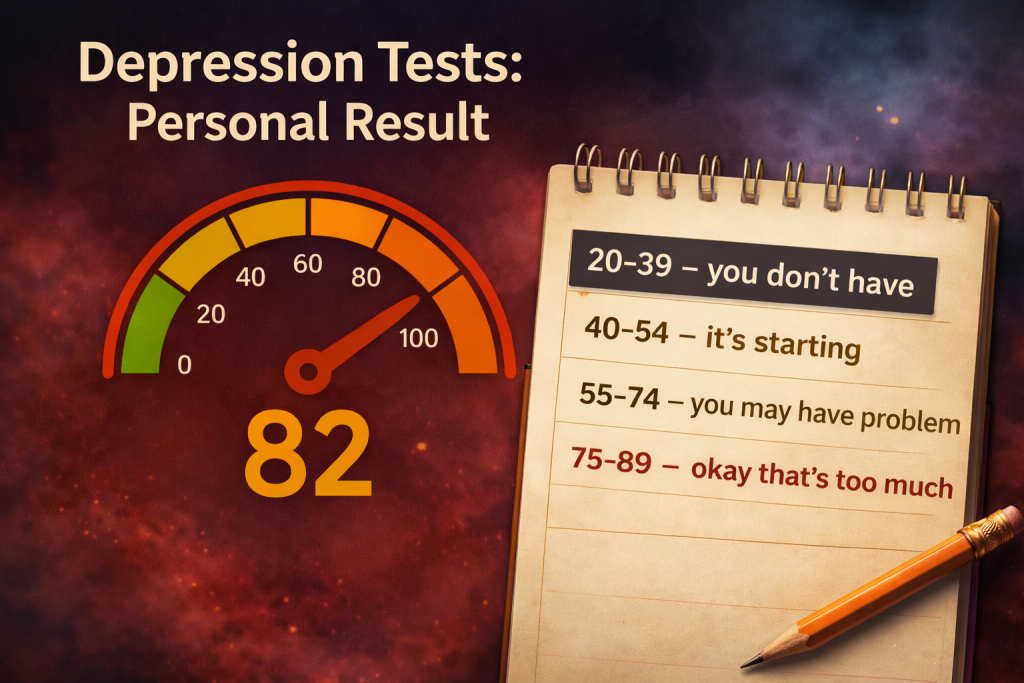
Some screenings present results as a numerical score, often shown on a 0–100 scale. This number is not a verdict. It’s a summary of how strongly certain emotional patterns appeared in your responses.
In general terms:
- Lower scores may suggest minimal emotional distress
- Mid-range scores can reflect ongoing stress, emotional fatigue, or early warning signs
- Higher scores may indicate that emotional challenges are more present and deserve attention
The score doesn’t define you. It reflects a moment in time.
Why Seeing a Number Can Feel Emotional
For some people, seeing a score brings relief. For others, it brings tears. Both reactions are normal.
A number can make invisible feelings feel real. It can validate experiences that were easy to dismiss or minimize. That validation alone can be powerful — not because it labels you, but because it acknowledges what you’ve been carrying.
That’s often why visual results resonate so strongly. They turn vague emotions into something you can look at, process, and think about calmly.
What These Screenings Can — and Cannot — Offer
Depression screenings can:
- Encourage awareness and reflection
- Help identify emotional patterns
- Support conversations with professionals
- Normalize mental health check-ins
They cannot:
- Diagnose medical conditions
- Replace professional care
- Predict outcomes or treatment needs
Responsible platforms make this distinction clear and encourage support when needed.
If Something Feels Heavier Than It Should
If a screening result feels unsettling, or if emotional distress affects daily life, speaking with a qualified mental health professional is an important next step. Persistent sadness, emotional numbness, or feelings of hopelessness shouldn’t be ignored.
Support doesn’t mean something is “wrong” with you. It means you’re paying attention.
A Quiet Step Toward Understanding
Mental health awareness doesn’t have to be dramatic. Sometimes it starts with a sentence that makes you pause. Sometimes it starts with a number that makes you think.
A depression screening is not about judgment. It’s about awareness. And awareness is often the first, quiet step toward taking better care of yourself.